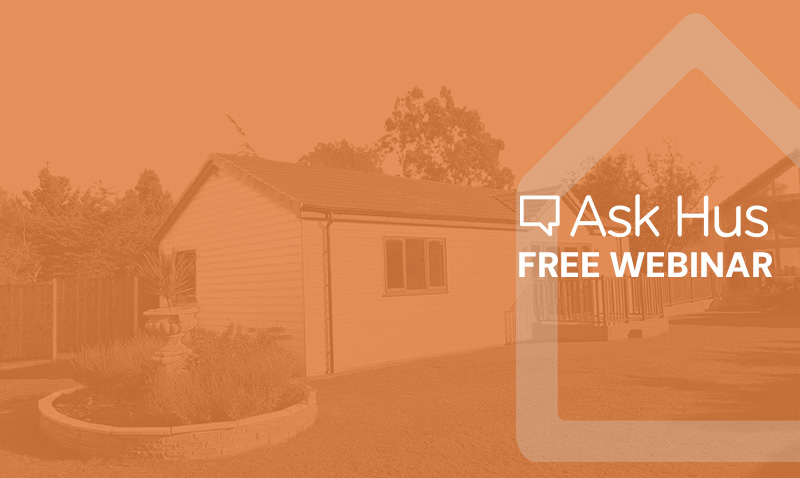

Our complete guide to building an annexe in the garden
How Much Space Do You Need for a Granny Annexe?
Wondering how much space you need for a granny annexe? Our experts can help you understand what’s possible on your plot and guide you through your options.
Speak to our experts to start planning your perfect annexe or read on for our helpful tips.
If you’re thinking about building a self-contained granny annexe in your garden for an elderly relative or family member, one of the first questions you’ll often ask yourself is: How much space do I need for a granny annexe?
It’s a common consideration. Many people assume you need a huge garden or acres of land to build an annexe. In reality, plenty of the compact granny annexes we install fit comfortably within a typical suburban garden, often with room to spare.
So, let’s explore some tips on how much space you really need in your garden, and why most gardens are more suitable for a garden annexe than you might think.
Can a garden annexe fit in a typical UK garden?
You might be surprised by how much you can fit into the average British garden. As a guide, the average garden covers around 180 square metres in England and around 140 square metres in London – roughly half the size of a tennis court. That’s more than enough space for many of our compact, self‑contained annexes.
Suburban homes built from the 1920s onwards typically have larger plots, while older terraces or inner‑city homes may have narrower or more enclosed spaces. The shape of your garden, existing plants, sheds, or landscaping can also influence where an annexe can sit, but they rarely rule it out altogether.
The key thing to remember is that modern garden annexes are designed to work with the space you have. Many of our most popular one‑bedroom annexe models fit comfortably into a standard garden. And if you’re fortunate enough to have a larger plot, you can even explore one of our spacious two‑bedroom annexes.
Do you offer garden annexes for smaller gardens?
Absolutely. Even if your garden is on the smaller side, there are plenty of annexe models designed to make the most of compact spaces. Many customers with average‑sized gardens choose a one‑bedroom annexe option like The Bawtry – a 7.05m by 5.05m home that feels light, airy and surprisingly spacious inside, yet fits comfortably into most suburban gardens.
And you might be pleasantly surprised by what’s possible. Once you speak to one of our annexe specialists, you may find you can accommodate a larger footprint than you first imagined, depending on your garden’s shape and layout.
To help you picture what could work in your own space, we’ve created OpenHus, a network of iHus customers who kindly open their doors so you can step inside a customer’s lived‑in garden annexe. It’s an honest and invaluable way to see how our designs work in gardens of all shapes and sizes.
How do you check whether your garden is big enough for an annexe?
Before you start choosing layouts or thinking about the cost of a garden annexe, it’s helpful to get a clear sense of how much usable space you actually have. The good news is that you don’t need specialist tools or surveying experience, just a simple, three‑step approach that gives you a reliable picture of what will fit comfortably in your garden.
- Decide how your annexe will be used
Before you reach for the tape measure, decide what your new garden annexe will be used for, and how you plan to divide the space inside. For example, if you’re planning on creating a home for a loved one, will they need one bedroom or two? Would an open-plan layout work best?
Exploring our range of garden annexes is a great place to start. You’ll find specific measurements and floorplans for each annexe, which can help you choose the right size for your garden. - Measure your garden space
The easiest way to assess your outdoor space is to sketch the shape of your garden on a piece of graph paper. Your site location plans or original property deeds usually include accurate measurements, but you can also measure the space yourself if needed.
Once you’ve chosen an annexe you like, note down its footprint and draw it to scale on your garden sketch. This gives you a clear visual of how the annexe would sit within your available space.
Now check these two considerations:- Does the annexe take up more than 50% of the available space?
- Is the annexe smaller than the main footprint of your home?
If the annexe occupies more than half of your garden, your annexe may be rejected. But don’t worry, this is exactly why we offer compact models, designed to work beautifully in smaller or narrower plots.
- Get planning permission for an annexe that matches your garden
Once you’ve identified an annexe that fits neatly within your garden, and is smaller than the footprint of your main home, the next step is applying for planning permission.
If your home already has an extension that reduces your available outdoor space, this may affect what’s possible. Our AskHus FAQ planning guides are a great next read if you’re ready to explore this stage in more detail.
And if you’d prefer to talk things through, our annexe specialists are always happy to help you understand your options and the best way to approach planning permission.
Want an expert second opinion?
If you’d like a clear, confident answer on whether your garden can accommodate a stylish, self‑contained annexe, just book one of our free, no-obligation consultations. Our experts will walk you through your options, assess your space and help you plan the perfect annexe for your home.
Looking to explore granny annexes further? You may find the following articles useful.
Insights
18/02/2026